Skip to content
NEXT DROP Thu 8 October · 7pm AEST --d --h --m --s Drop is live now Get drop alerts →
4.95 / 5 · 1200+ Reviews
Lifetime Resharpening, Warranty & Free Engraving
Auspost Shipping
Auspost Shipping
Made in Anna Bay, NSW
Work Sharp Guided Field Sharpener laid out on a topographic map, ready to put an edge on a hunting knife
Knife Sharpeners

Keep the edgewe gave you.

Every Iron Gate blade leaves Anna Bay shaving sharp. A sharpener is how it stays that way — on the tailgate, at the camp table, on the kitchen bench. Pick the right one in about thirty seconds.

4.95 / 5 from 1,200+ reviews
  • Free lifetime resharpening
    on Iron Gate knives
  • Work Sharp
    3-year warranty
  • Tracked AusPost
    from Anna Bay NSW
  • Handmade knives
    backed for life

We resharpen your knife free, for life. So why own a sharpener?

Because posting a knife back to the workshop is for the once-a-year reset — after a hard season, a chipped edge, a knife that's been loved a bit too hard. Send it, and it comes home the way it left.

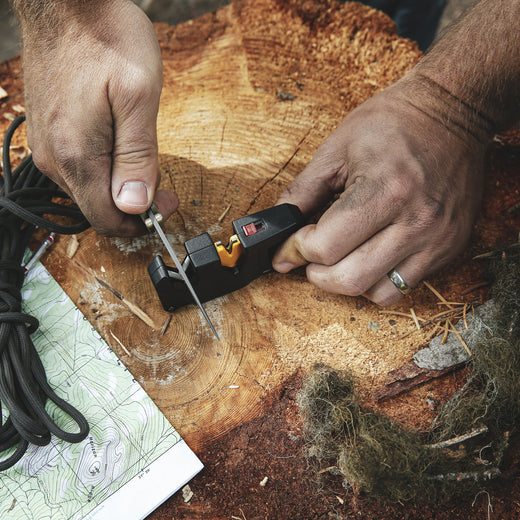
A sharpener is for the other fifty-one weeks. It's the two minutes on the tailgate between the first deer and the second. The touch-up before the roast. It's how a good knife stays a good knife instead of quietly going dull in a drawer while you wait for a free Tuesday to post it.

The rule of thumb: a sharp knife is a safe knife. A dull blade needs force, and force is what makes it slip.

Start here

If you only ever own one

Three in every four sharpeners we sell are this one — and it's not close. Five sharpening stages in something that fits in a shirt pocket, with the angle guides built in so you can't get the bevel wrong.

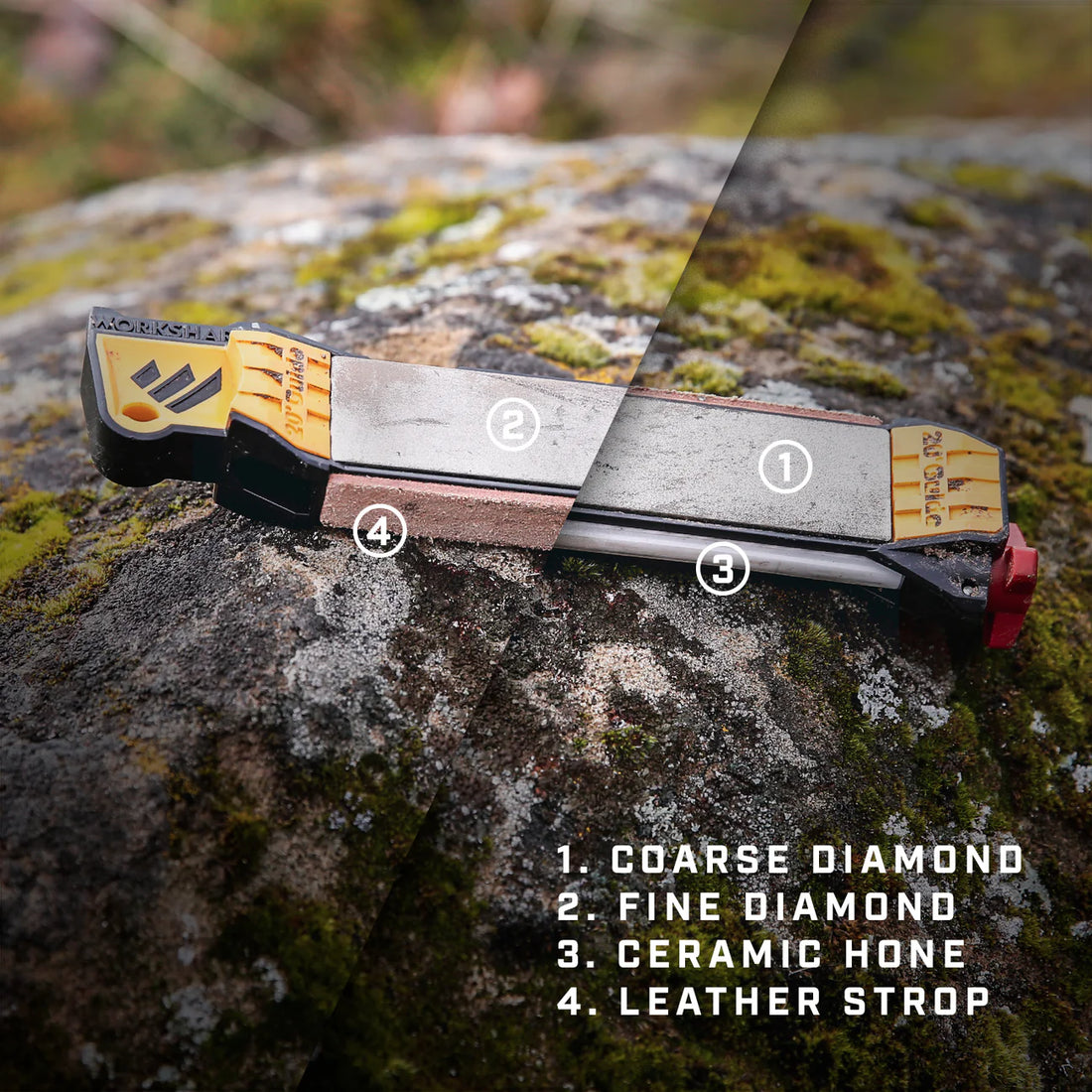
Our best-selling sharpenerWork Sharp Guided Field Sharpener opened out, showing its coarse diamond, fine diamond, ceramic rod and leather strop stages
Work Sharp

Guided Field Sharpener

Coarse to razor in one pocket-sized tool. Built-in 20° and 25° guides mean you hold the angle without thinking about it — which is the whole game.

$99.99
  • 01Coarse diamondBrings back an edge that's gone properly blunt or rolled.
  • 02Fine diamondRefines the bevel you just cut. This is where sharp starts.
  • 03Ceramic rodHones the apex keen. Has a fishhook groove cut into it.
  • 04Serration rodFor bread knives, rope knives and anything toothed.
  • 05Leather stropPre-loaded with micro-abrasive. Takes it to shaving sharp.

Also hiding in there: a broadhead wrench, a small storage compartment under the magnetic diamond plates, and a lanyard hole. Three-year Work Sharp warranty.

Full details & specs
The range

Find your sharpener

Tap where you'll actually be sharpening. We'll cut the list down to what suits.

Everything we stock, best sellers first.

  • Work Sharp

    Guided Field Sharpener

    Hunters, campers and anglers. Five stages in a pocket — reshape, refine, hone, strop, done.

    • 20° & 25° guides
    • 5 stages
    • Fits a pocket
    $99.99
  • Work Sharp

    Precision Knife Sharpener

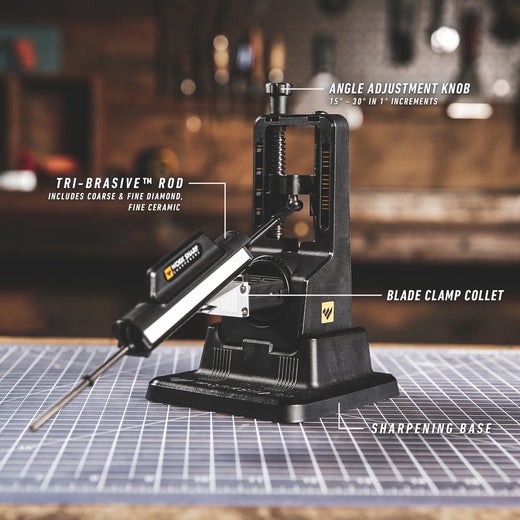
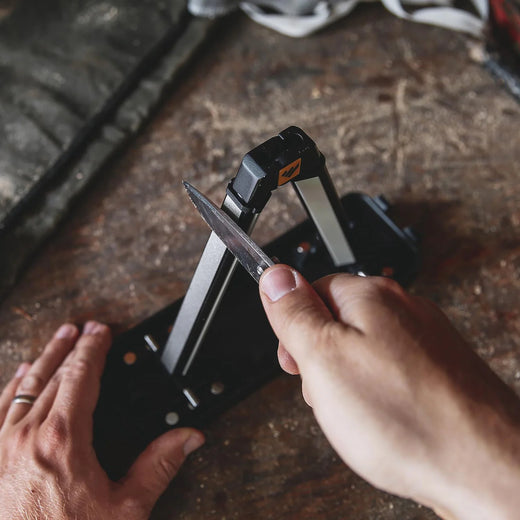
    A benchtop system for the whole block. Clamp the blade, dial the angle, every stroke lands the same.

    • 15°–30° dial
    • 320 & 600 diamond + ceramic
    • V-block clamp
    $180.00
  • Work Sharp

    Pivot Plus Sharpener

    Lives in the tackle box or the glovebox. A touch-up tool, not a full system — but it brings an edge back fast.

    • Carbide + ceramic
    • Diamond rod
    • Fishhooks & serrations
    $31.00
  • Work Sharp

    Whetstone Knife Sharpener

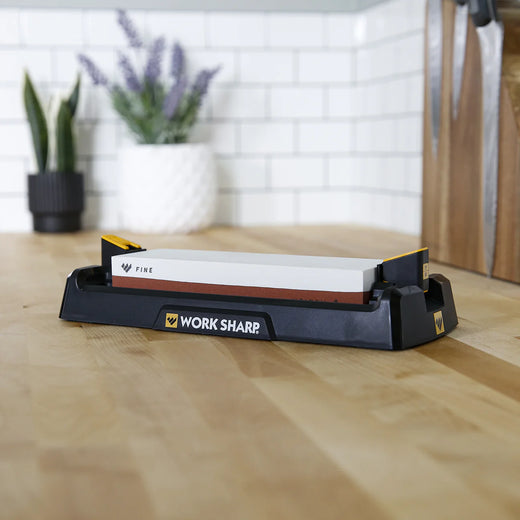
    Traditional water stone with the guesswork removed. The proper way to finish a thin kitchen blade.

    • 1000 / 6000 grit
    • 15° & 17° guides
    • Water-control base
    $99.80
  • Work Sharp

    Angle Set Knife Sharpener

    Folds out to sharpen, folds flat to store. Five angle settings for everything from thin kitchen steel to thick outdoor blades.

    • 15 / 17 / 20 / 22 / 25°
    • Ceramic rods
    • Folds flat
    $120.00
  • Work Sharp

    Professional Precision Adjust Knife Sharpener

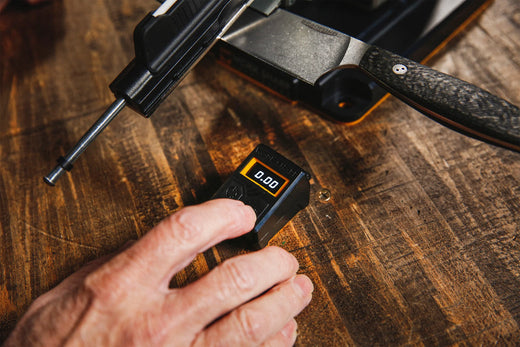
    The full workshop system. Digital angle readout to a quarter of a degree and seven abrasives from repair to strop.

    • 15°–30° digital
    • 7 abrasives 220–800
    • Weighted metal base
    $592.00
  • Work Sharp

    Benchstone Knife Sharpener

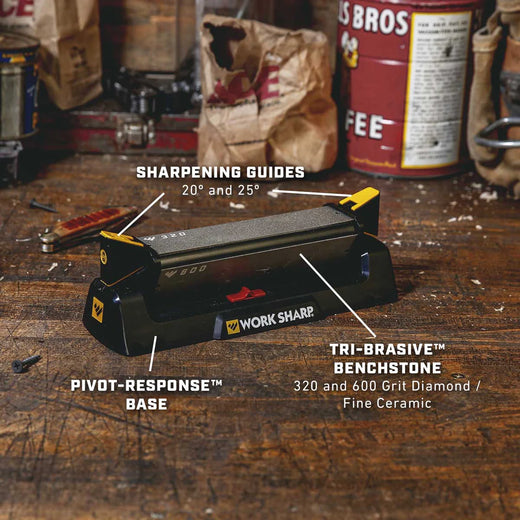
    Freehand feel, guided bevel. The pivoting base follows the curve of the blade so the whole edge gets touched.

    • 20° & 25° guides
    • 320 & 600 diamond + ceramic
    • No oil or water
    $120.00
  • Work Sharp

    Pivot Sharpener

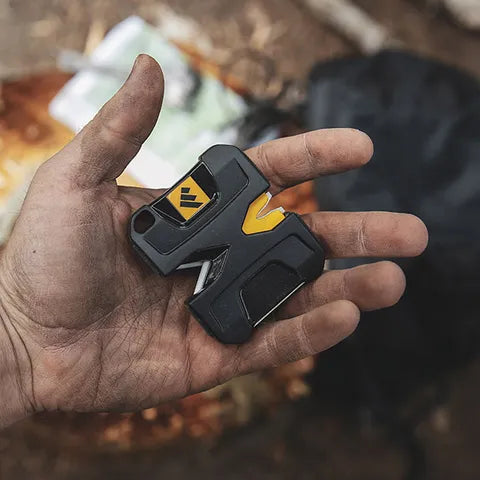
    The twenty-dollar fix. Carbide and ceramic slots plus a diamond plate, small enough to forget you own it.

    • Carbide + ceramic
    • Diamond plate
    • Hook groove
    $20.00
  • Work Sharp

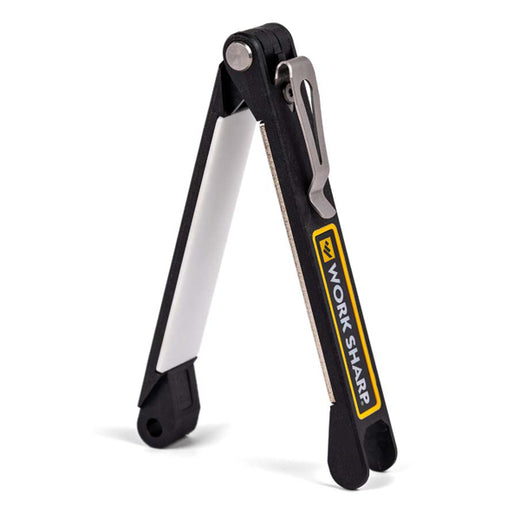
    Folding Field Sharpener

    The Work Sharp® Folding Field Sharpener™ provides reliable guided sharpening in an ultra-compact, pocket-ready design for field and everyday carry. The Work Sharp Folding...

    $72.00
Side by side

The whole range, compared

Same information, no scrolling back and forth between product pages.

Sharpener Best for Angles & abrasives Price Stock
Guided Field Hunting, camping and fishing 20° & 25° guides · 5 stages · Fits a pocket $99.99 In stock
Precision Everyday sharpening at the bench 15°–30° dial · 320 & 600 diamond + ceramic · V-block clamp $180.00 In stock
Pivot Plus Quick touch-ups on the go Carbide + ceramic · Diamond rod · Fishhooks & serrations $31.00 In stock
Whetstone Thin kitchen blades 1000 / 6000 grit · 15° & 17° guides · Water-control base $99.80 In stock
Angle Set Travelling light, any blade 15 / 17 / 20 / 22 / 25° · Ceramic rods · Folds flat $120.00 In stock
Professional Precision Adjust Expensive steel and big collections 15°–30° digital · 7 abrasives 220–800 · Weighted metal base $592.00 In stock
Benchstone Learning freehand technique 20° & 25° guides · 320 & 600 diamond + ceramic · No oil or water $120.00 In stock
Pivot An edge in an emergency Carbide + ceramic · Diamond plate · Hook groove $20.00 In stock
Folding Field Knife sharpening — $72.00 In stock

Swipe the table sideways →

Edge school

Sharpening, honing, stropping

Three different jobs that everyone lumps together. Once you know which one your knife actually needs, you stop taking steel off a blade that didn't need it.

Sharpening

Removing metal to cut a fresh bevel. This is what a diamond plate or a coarse stone does. It's the only thing that fixes a blade that's genuinely blunt, chipped or rolled over.

When it won't bite paper

Honing

Straightening the apex rather than cutting a new one. A ceramic rod pushes a folded-over edge back into line. Takes seconds, removes almost nothing, and buys you weeks.

Every few uses

Stropping

Leather loaded with fine abrasive, polishing the very tip of the edge and wiping off the burr left behind by sharpening. This is the step that takes “sharp” to “shaving sharp”.

Finish every session
Angles

The number that decides everything

Angle is the trade-off between keen and tough. Go shallower and it cuts better but chips sooner. Go steeper and it survives bone and hardwood but won't glide through a tomato. It's measured per side — a knife sharpened at 20° per side has a 40° included edge.

Every blade is ground by hand, so treat the ranges below as a starting point and let the bevel already on your knife have the final say.

Angle (per side) Suits What you get
15°–17°Thin Japanese-style kitchen blades, fillet and boning knivesThe keenest edge available. Slices beautifully, chips if you hit bone or a plate.
18°–20°Western chef's knives, most pocket knives, general kitchen workThe sweet spot. Sharp enough for anything on a board, tough enough to survive real use.
20°–22°Hunting and outdoor knives, skinners, everyday carryHolds up through a full day of field work without needing a touch-up.
25°+Bushcraft, camp knives, choppers and anything that meets timberThe most durable edge. Takes abuse, batons wood, forgives a lot.

Swipe the table sideways →

  • 20–22°

    Our outdoor blades

    Hunter, Mini Hunter, Bushcraft, Bear, Stockman, Wedgetail, Crow, Tracker — anything that goes bush, on the boat or in a pack. Tough enough for bone, hide and hardwood.

    Per side · general range
  • 15–20°

    Our kitchen & fillet blades

    Chef, Gyuto, Santoku, Nakiri, Bunka, plus the Mako and Flexy Fillet. Thinner steel doing finer work, so it wants a keener edge than a field knife.

    Per side · general range

Not sure what angle your knife is at?

Match what's already there. Colour the bevel with a permanent marker, take two light passes, then look at where the ink came off. Ink gone from the very edge means you're too shallow. Ink gone from the shoulder means you're too steep. Ink gone evenly across the whole bevel means you've found it — now sharpen.

This one trick is the difference between maintaining an edge and slowly reprofiling a knife by accident, and it works on any blade, any sharpener, any brand.

Your first sharpen

Six steps, ten minutes

Do it once slowly and it stops being a mystery. Every guided Work Sharp works on the same principle.

  1. Find the bevel

    Marker trick above. Set your guide or your dial to match what the maker ground, not what you read online.

  2. Start coarse only if you need to

    If the knife still bites paper, skip the diamond and go straight to the fine side. Coarse abrasive is for repairing damage, not maintenance.

  3. Work one side until you feel a burr

    Light, even strokes from heel to tip. Run a thumb across — never along — the back of the edge. That tiny catching lip is the burr, and it means you've sharpened all the way to the apex.

  4. Repeat on the other side

    Same number of strokes, same pressure. The burr will flip over to the side you just left.

  5. Refine, then hone

    Move to the fine diamond, then the ceramic. Fewer strokes and lighter pressure each time you step up a grit.

  6. Strop the burr off

    Trailing strokes on leather, spine leading, edge dragging behind. Ten a side. This is where it goes from sharp to unnervingly sharp.

Don't do this

Five ways people wreck a good knife

  • Leaning on itPressure doesn't sharpen — abrasive does. Heavy hands round the apex over and heat the steel. Let the diamond do the work.
  • Chasing a new angle every timeSharpening at 25° one month and 15° the next means you never actually reach the edge, you just grind a new shoulder. Pick an angle and stay there.
  • Stopping before the burrNo burr means you never got to the apex, and the knife will feel sharp for about one carrot. Feel for it before you move on.
  • Reaching for coarse firstMost knives that "won't cut" need thirty seconds on a ceramic rod, not a diamond plate. Coarse grit is years off a blade's life if you use it every time.
  • Pull-through sharpenersThe cheap V-slot ones with the crossed carbides tear steel out instead of cutting it, and they'll happily reprofile a hand-ground bevel into something the maker wouldn't recognise. Never on a knife you care about.
While you're here

A sharp edge still rusts

Sharpening is half of knife care. The other half is what you do in the ninety seconds after you wash it.

Questions

The ones we get asked

Do I need a sharpener if you resharpen my knife free for life?

No — you never have to buy one. Post your Iron Gate knife back any time it needs sharpening, maintenance or repair and we'll sort it out free, for life. That offer doesn't have an expiry date or an asterisk.

A sharpener is for convenience, not obligation. It's the two minutes on the tailgate mid-hunt, or the touch-up before Sunday lunch, so the knife is never sitting dull while it waits for a trip to the post office.

Which one should I buy first?

For most people who own one of our outdoor knives, the Guided Field Sharpener. It's roughly three in every four sharpeners we sell, it covers coarse repair through to stropping, and the built-in angle guides mean a first-timer gets a good result on day one.

If your knives mostly live on a kitchen bench and never leave the house, a fixed benchtop system like the Precision Adjust will give you a more consistent edge with less technique.

What angle should I sharpen my Iron Gate knife at?

Match the bevel that's already on the blade. Colour it with a permanent marker, take two light passes, and see where the ink comes off — that tells you the truth in about ten seconds, on any knife.

As a general guide, outdoor and hunting profiles are happy around 20–22° per side and kitchen blades around 15–20°, but the grind on your knife is the answer, not a number from the internet.

Will sharpening it myself void the lifetime guarantee?

Not at all. The guarantee covers sharpening, maintenance and repair for the life of the knife — including fixing an edge you're not happy with. We'd rather you use the knife and occasionally make a mess of the bevel than leave it in a drawer.

Will these work on Damascus, Elmax and other hard steels?

Yes — as long as you're using diamond abrasive. Every Work Sharp here has diamond in the stack, which cuts hard steel and carbides that plain ceramic struggles with. Harder steels take longer to sharpen and hold the edge longer once you get there. Damascus san mai sharpens like the core steel inside it, so treat it the same way.

How often should I be sharpening?

Sharpen far less often than you think, and hone far more. A quick pass on a ceramic rod every few uses keeps most knives keen almost indefinitely. A full sharpen is only needed when honing stops bringing it back — for a kitchen knife in regular use that's usually a matter of months, not weeks.

The test: hold a sheet of paper by one corner and slice down. A sharp knife cuts a clean line without tearing. If it slides or snags, start with honing.

What about serrated knives and fishhooks?

The Guided Field Sharpener, Pivot Plus and Angle Set all carry a tapered rod that fits into serrations and hook gullets. The Professional Precision Adjust includes a ceramic serration rod as well. Flat plates and stones won't do it — you need the round profile.

Can I add a sharpener to a knife order?

Yes. Add it to the same cart and it ships with your order. If your knife is built to order, the sharpener will be held and sent together with the finished knife unless you ask us to send it ahead — just reply to your order confirmation and we'll split the shipment.

Iron sharpens iron

A knife you look after is a knife you'll hand down.

Pick the one that suits where you'll use it. If you get it wrong, tell us and we'll help you sort it.

Back to the range Ask us which one
Back to top
Shop the Drop